Introduction
Waste streams are becoming more complex, creating new challenges for recycling plants. Smart recycling plants combine automated sorting equipment, intelligent control and real-time monitoring to improve process efficiency and resource recovery.
The future of waste sorting is not simply more automation, but smarter process integration.
What Is a Smart Recycling Plant?
A Smart Recycling Plant is an automated recycling system that combines sorting equipment, intelligent control, monitoring and coordinated process management.
A typical system may include:
- Automated feeding and conveying
- Screening and particle-size classification
- Magnetic separation
- Gravity separation
- Eddy current separation
- Washing and dewatering
- Intelligent central control
A smart recycling plant is more than an automated recycling line. It connects equipment, control and process management into one system, allowing different stages to work together according to the material and recovery requirements.

Why Is Waste Sorting Becoming More Intelligent?
More Complex Waste Streams
Modern waste streams can contain materials with different particle sizes, densities, moisture levels and compositions. IBA, mixed solid waste, industrial waste and other complex materials may contain both valuable metals and unwanted fractions.
This makes it difficult for a single separation technology to handle the entire material stream.
Higher Demand for Consistent Processing
Large-scale recycling plants need stable material flow and consistent equipment operation. Automation can reduce dependence on repetitive manual tasks, while centralized control makes it easier to monitor the overall process.
Greater Focus on Resource Recovery
Modern recycling is increasingly focused on recovering valuable materials rather than simply reducing waste volume. Ferrous metals, non-ferrous metals and other recyclable fractions can require different separation technologies.
A well-designed process therefore needs to match each technology with the material it is designed to separate.
What Makes a Recycling Plant Smart?
Intelligent Central Control
A central control system can monitor key equipment and operating conditions across the production line.
Operators can view equipment status, alarms and process conditions from a centralized interface, making production management more convenient.
Automated Process Coordination
The value of automation comes from coordinating the entire process rather than simply automating individual machines.
For example, screening can prepare suitable particle sizes for downstream separation, magnetic separation can remove ferrous metals, and an Eddy Current Separator can recover suitable non-ferrous metals.
Real-Time Monitoring
Real-time monitoring provides information about equipment operation and helps operators identify abnormal conditions more quickly.
It can also support equipment maintenance and process management.

Process Optimization
Different waste streams require different operating conditions. Material composition, particle size and moisture can change during processing.
Combining equipment monitoring with material testing and operating experience can help optimize the process for specific feed materials.
Core Technologies in a Smart Recycling Plant
Screening
Screening classifies materials by particle size and prepares suitable fractions for downstream separation.
Trommel screens, vibrating screens and dewatering screens can be selected according to the material and process requirements.
Magnetic Separation
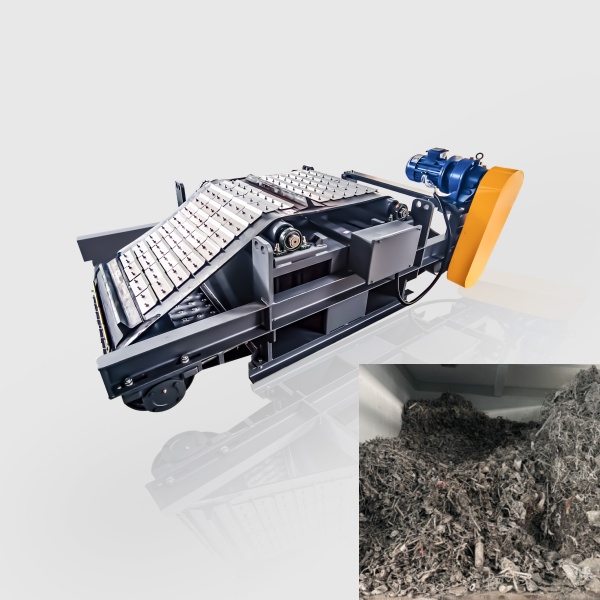
Magnetic separators are mainly used to remove ferrous metals such as iron and steel.
Removing ferrous material at the appropriate stage can improve material quality and prepare the feed for subsequent separation.
Gravity Separation
Gravity separation uses differences in material density to separate suitable heavy and light fractions.
Jig machines and other gravity separation equipment can be used when density differences provide an effective basis for recovery.
Eddy Current Separation
An Eddy Current Separator is mainly used to recover conductive non-ferrous metals such as aluminum, copper and zinc from suitable prepared materials.
It is commonly used after screening and ferrous metal removal, allowing the system to focus on non-ferrous metal recovery.

Washing and Dewatering
Wet, sticky or contaminated materials may require additional preparation before downstream separation.
Washing can help remove unwanted materials, while dewatering can improve material conditions for subsequent processing.
In some applications, auxiliary air classification may also be added to remove lightweight materials when required by the feed composition.
How Does a Smart Recycling Plant Work?
A typical recycling process can follow a structure such as:
Feeding → Screening → Magnetic Separation → Targeted Separation → Washing/Dewatering → Final Recovery
Each stage has a specific role.
Screening controls particle size, magnetic separation focuses on ferrous metals, while gravity separation and Eddy Current Separation can target suitable dense and non-ferrous fractions.
Washing and dewatering can be added when the material condition requires it.
The exact configuration should always be determined by the material characteristics, recovery targets and required product quality.
Where Are Smart Recycling Plants Used?
Smart recycling systems can be adapted to a wide range of waste streams.
Municipal Solid Waste
Automated screening and separation can help recover recyclable materials from mixed municipal waste.
Construction and Demolition Waste
Screening and separation technologies can classify materials and support the recovery of reusable fractions.
Incineration Bottom Ash
IBA processing may combine screening, magnetic separation, gravity separation, Eddy Current Separation, washing and dewatering according to the material characteristics.
Automotive Shredder Residue
ASR contains complex mixtures of metals and non-metallic materials, requiring multiple separation technologies.
E-Waste and Industrial Waste
E-waste and industrial waste can contain valuable metals mixed with plastics, minerals and other materials. The process can be configured according to the target materials and feed composition.
How to Upgrade a Traditional Recycling Line
A smart recycling upgrade does not always require replacing an entire existing line. The process can be improved step by step.
1. Analyze the Existing Process
Identify major limitations such as high manual dependence, low recovery, unstable material flow, equipment bottlenecks or frequent failures.
2. Improve the Separation Process
Adjust the process according to the material. This may involve screening, magnetic separation, gravity separation, Eddy Current Separation, washing or dewatering.
The objective is not simply to add more machines, but to give each machine a clear role.
3. Add Intelligent Control
Key equipment can be connected through a centralized control system to improve process visibility and equipment management.

4. Optimize the Complete Line
A successful upgrade should improve how different stages work together rather than focusing only on individual machines.
The goal is to improve the process as a whole.
The Future of Smart Recycling
The next stage of recycling automation will focus on more than reducing manual work.
Future recycling plants are expected to place greater emphasis on:
- Intelligent process control
- Better equipment integration
- Real-time monitoring
- Data-supported optimization
- Flexible processing for changing waste streams
- Higher resource recovery
The overall direction is moving from equipment-centered recycling toward process-centered and data-supported recycling.
Conclusion
A Smart Recycling Plant is more than a line of automated machines. It combines sorting equipment, intelligent control and process integration to handle increasingly complex waste streams.
The right solution starts with the material and recovery target, then matches the appropriate technologies to build a more efficient recycling process.
RUIJIE provides integrated recycling equipment and intelligent plant solutions for different waste streams and recovery requirements.