Introduction
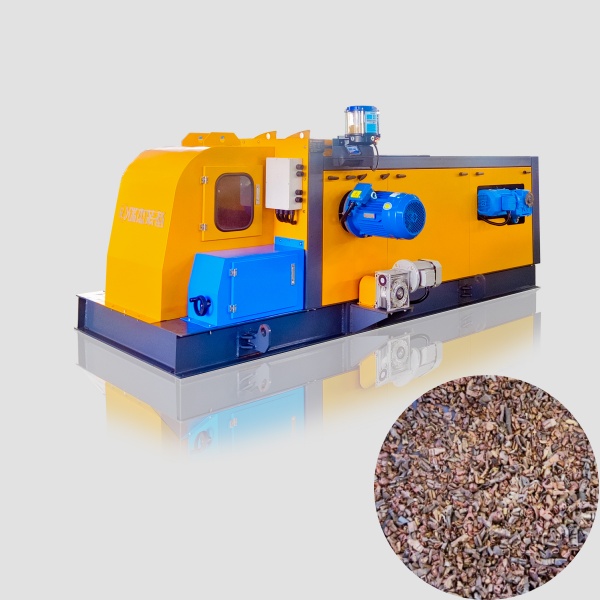
Eddy current separators and air separators perform different separation tasks in recycling plants. An ECS is mainly used to recover conductive non-ferrous metals, while an air separator separates lightweight materials from heavier fractions.
They are not always competing technologies. In many recycling lines, they can work together to improve material preparation and downstream recovery.
Eddy Current Separator vs Air Separator: What Is the Difference?
The simplest way to understand the difference is to look at what each machine is designed to separate.
An eddy current separator recovers conductive non-ferrous metals, while an air separator separates lightweight materials from heavier fractions using controlled airflow.
| Factor | Eddy Current Separator | Air Separator |
|---|---|---|
| Separation principle | Eddy current force | Controlled airflow |
| Main target | Non-ferrous metals | Lightweight materials |
| Typical materials | Aluminum, copper, zinc | Plastic film, paper, fiber |
| Main purpose | Metal recovery | Light-material removal |
| Typical role | Recovery stage | Pre-treatment / classification |
| Key limitation | Feed condition and particle size affect performance | Airflow and moisture affect separation |
The Therefore, choosing between the two should not start with the machine itself. It should start with the material you want to remove or recover.

How Does an Eddy Current Separator Work?
Eddy Current Separation Principle
An eddy current separator uses a rapidly rotating magnetic rotor to generate an alternating magnetic field.
When conductive non-ferrous metals enter this magnetic field, eddy currents are induced inside the metal particles. The resulting repulsive force changes their trajectory, allowing them to be separated from non-metallic materials.
The separation is therefore based primarily on the material’s electrical conductivity and interaction with the magnetic field, rather than simply its weight.
What Can an Eddy Current Separator Recover?
An ECS is commonly used to recover suitable conductive non-ferrous metals, including:
- Aluminum
- Copper
- Zinc
- Other suitable non-ferrous metal fractions
For recycling applications, an ECS is often installed after screening and ferrous metal removal. This helps prepare a more suitable feed for non-ferrous metal recovery.
For example, in an IBA recycling plant, ferrous metals can first be removed by magnetic separation before the remaining material enters an ECS for aluminum and other suitable non-ferrous metal recovery.

How Does an Air Separator Work?
Air Separation Principle
An air separator uses a controlled airflow to change the movement of different materials.
Lightweight materials can be carried or redirected by the air stream, while heavier particles are more likely to fall into a separate fraction. Actual separation performance depends on factors such as density, particle size, shape and aerodynamic behavior.
What Is an Air Separator Used For?
Air separators are commonly used to remove lightweight contaminants such as:
- Plastic film
- Paper
- Fibers
- Lightweight combustible materials
- Other light waste
This makes air separation particularly useful for pre-treatment and material classification.
Unlike an ECS, an air separator is not a dedicated non-ferrous metal recovery machine. Its main function is to separate light and heavy fractions rather than specifically identify and recover conductive metals.

When Should You Use Each Machine?
Use an Eddy Current Separator When:
- Non-ferrous metal recovery is the main objective.
- The feed contains aluminum, copper or other suitable conductive metals.
- Ferrous metals have already been removed.
- The material has been properly screened and prepared.
Typical applications include IBA recycling, ASR processing, WEEE recycling and mixed solid waste recovery.
Use an Air Separator When:
- Lightweight contaminants need to be removed.
- Plastic film, paper or fibers are mixed with heavier material.
- A cleaner feed is needed for downstream equipment.
- The process requires light/heavy material classification.
Air separation can be useful as a pre-treatment stage before further sorting.
Can ECS and Air Separator Work Together?
Yes. This is often more useful than treating them as competing technologies.
For example, an IBA processing line may use:
Screening → Overband Magnetic Separator → Air Separator → Eddy Current Separator
Each machine performs a different task:
Screening
Controls the material size.
Magnetic Separation
Removes ferrous metals such as iron and steel.
Air Separation
Removes suitable lightweight contaminants.
ECS
Recovers non-ferrous metals such as aluminum from the prepared material.
This combination allows each separator to focus on the material it is designed to handle.
The goal is not to choose one machine for everything, but to give each separation technology the right job.

How to Choose the Right Separation Equipment
Instead of asking which machine is better, consider the following questions.
1. What Are You Trying to Recover?
If the main target is non-ferrous metal, an ECS may be appropriate.
If the main objective is removing lightweight contaminants, an air separator may be more suitable.
2. What Is the Feed Particle Size?
Particle size distribution affects the performance of both technologies.
Before selecting equipment, determine the main particle-size range and whether the feed requires additional screening or size classification.
3. How Wet Is the Material?
Moisture is an important consideration.
Wet or sticky material can affect material movement and separation performance. Depending on the feed condition, additional preparation or moisture control may be required.
4. What Throughput Do You Need?
The required processing capacity should be considered together with the feed composition and target recovery rate.
A machine should not be selected based only on nominal capacity. The actual material characteristics also matter.
5. What Is the Available Plant Layout?
Consider:
- Equipment footprint
- Conveyor direction
- Feed and discharge positions
- Available installation space
- Access for maintenance
These factors can affect how the equipment is integrated into the complete processing line.
6. Is It a Single Machine or a Complete Line?
For relatively simple material streams, one separation technology may be sufficient.
For complex mixed waste, however, several technologies may be needed. Screening, magnetic separation, air separation, ECS and other processes can each handle a different fraction of the material.
Conclusion
Eddy Current Separator vs Air Separator is not simply a choice between two competing machines.
ECS is mainly used for non-ferrous metal recovery, while air separation focuses on lightweight material removal and classification.
For mixed waste, IBA and other complex materials, combining different separation technologies can provide a more practical route to better material quality and metal recovery.
Start with the material and recovery target, then choose the equipment.
Frequently Asked Questions
Can an Air Separator Replace an Eddy Current Separator?
Generally, no. Air separation and ECS use different separation principles and target different material fractions. An air separator is not a dedicated solution for selective non-ferrous metal recovery.
Should an Air Separator Be Installed Before an ECS?
It can be used before an ECS when lightweight contaminants need to be removed first. The actual sequence should be determined according to the feed material and process requirements.
Does Wet Material Affect ECS and Air Separation?
Yes. Excessive moisture or sticky material can affect material movement and separation performance. Feed preparation or moisture control may therefore be necessary.
What Metals Can an Eddy Current Separator Recover?
An ECS is mainly used for suitable conductive non-ferrous metals such as aluminum, copper and zinc. Actual performance depends on material characteristics and operating conditions.
Can Air Separation Remove Metal?
Air separation can direct heavier metal particles toward the heavy fraction, but it does not selectively recover non-ferrous metals in the same way as an ECS.