Copper is one of the most valuable metals found in modern waste streams. However, recovering it efficiently is often more difficult than simply separating metal from non-metallic materials. In complex recycling streams, copper may appear as wire, small fragments, mixed metal particles, or fine particles attached to other materials.
Effective copper recovery from mixed waste depends on understanding where copper is lost during processing and designing a recovery system around the characteristics of each material fraction. The goal is not only to recover visible copper, but also to capture valuable copper that might otherwise leave the plant with mixed residues.
Why Is Copper Difficult to Recover from Mixed Waste?
The main challenge is the diversity of the material itself.
Mixed waste can contain copper together with aluminum, brass, iron, plastics, rubber, glass, minerals, ash and other materials. Copper particles may also vary significantly in shape and size, from large pieces to thin wire and fine fragments.
Three issues commonly affect recovery performance.
Copper Is Not Always Fully Liberated
Copper cannot be efficiently separated when it remains attached to or trapped inside other materials.
For example, copper-containing components may remain mixed with plastic, rubber or mineral residues after the first processing stage. In ash-based materials, small metal particles can also be surrounded by mineral matter.
For this reason, material preparation is an important starting point. Crushing or shredding should aim to expose and release valuable metals without creating unnecessary ultra-fine particles.
The objective is not simply to make the material smaller. It is to create a material condition that allows later separation technologies to work effectively.

Fine Copper Can Easily Be Missed
Large copper pieces are relatively easy to identify and recover. Fine copper is often much more challenging.
Small copper particles and thin copper wire can behave differently from larger metal pieces during separation. They may become mixed with fine residues or move unpredictably through the processing system.
As a result, the fine fraction can contain valuable copper that is not recovered by a process designed primarily for larger materials.
This is why improving fine material management can create an important opportunity for higher overall recovery.
Copper Is Often Mixed With Other Valuable Metals
Another challenge is that copper is rarely processed alone.
After the removal of iron and other magnetic materials, the remaining metal fraction may still contain aluminum, brass and other conductive metals.
Recovering a mixed non-ferrous fraction is therefore only one stage of the process. If the goal is to produce a higher-value copper-rich product, additional upgrading may be required depending on the composition of the recovered material.
How Does Copper Recovery from Mixed Waste Work?
A practical copper recovery from mixed waste process focuses on gradually reducing material complexity.
Rather than expecting one machine to solve every separation problem, different technologies can be used at different stages.
1. Material Liberation
The first stage prepares the material for separation.
Depending on the waste stream, this may involve crushing, shredding or breaking apart mixed materials. The purpose is to improve the physical separation between copper and surrounding materials.
However, excessive size reduction should be avoided when possible. Over-processing can create additional fine particles that may become more difficult to recover.
A good process balances liberation with particle control.
2. Ferrous Metal Removal
Magnetic separation is commonly used to remove iron and steel from the material stream.
This simplifies the material before further processing and reduces the amount of magnetic material entering downstream equipment.
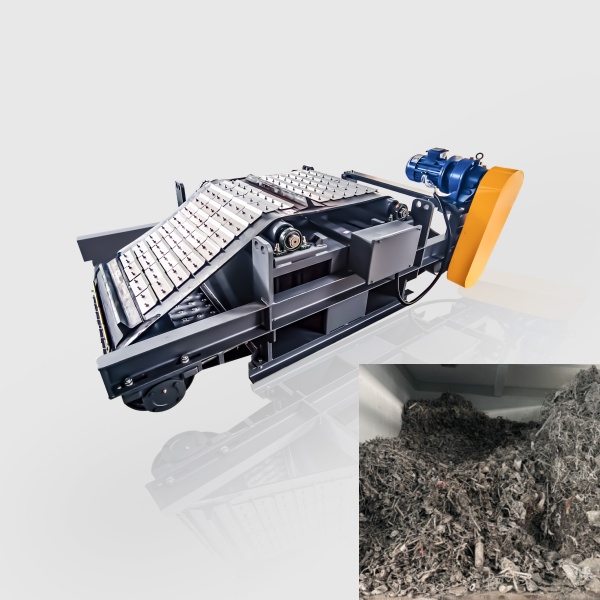
Depending on the application, equipment such as electromagnetic overband separators or drum magnetic separators may be used at different stages of the process.
Removing ferrous metals early allows later recovery stages to focus more effectively on valuable non-ferrous materials.
3. Non-Ferrous Metal Recovery
For suitable material fractions, an Eddy Current Separator can recover conductive non-ferrous metals from non-conductive materials.
The recovered fraction may include:
- Copper
- Aluminum
- Brass
- Other conductive metals
This stage is particularly useful for concentrating valuable metals from a larger mixed waste stream.
However, an important point is that an eddy current separator generally recovers a non-ferrous metal fraction, rather than automatically producing pure copper.
The next processing stage depends on the required product quality.

4. Fine Copper Recovery and Concentrate Upgrading
Fine materials may require a different recovery approach.
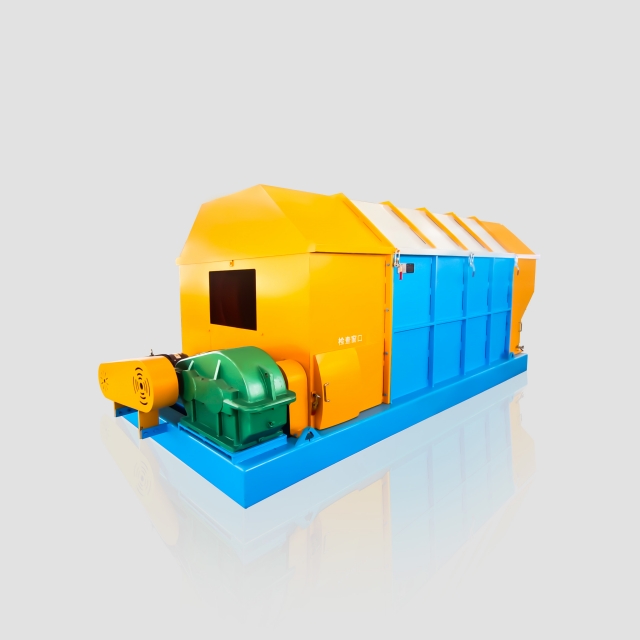
For suitable materials, gravity-based or density-based separation technologies can help recover heavy metal fractions that are difficult to capture through conventional dry sorting alone.
For example, jig separation can be used in appropriate applications where differences in material density support separation.
Additional cleaning or upgrading stages can then improve the quality of the recovered copper-containing product.
The exact equipment combination should always depend on the material characteristics rather than following a fixed process for every waste stream.
Why Particle Size Classification Matters
One of the most important considerations in mixed metal recycling is particle size.
Copper fragments of different sizes do not behave in the same way during separation. Large pieces, medium-sized fragments and fine particles may require different processing conditions.
When all particle sizes are processed together, separation performance can become less predictable.
Large materials may dominate the movement of smaller particles, while fine materials may not receive the same separation effect as larger pieces.
Separating the feed into suitable size fractions before key recovery stages can improve process control.
A practical approach may include:
- Processing coarse materials with equipment designed for larger particles
- Using suitable non-ferrous separation for medium-size fractions
- Applying specialized recovery methods to valuable fine materials
The purpose of classification is not simply to create more process stages. It is to allow each material fraction to enter the most suitable recovery environment.
Dry vs. Wet Copper Recovery
Both dry and wet processing methods can be used in copper recovery, but they serve different material conditions.
Dry Processing
Dry processing is commonly suitable for relatively dry and well-liberated materials.
Its advantages can include:
- Simpler plant configuration
- Lower water requirements
- Easier integration with conventional sorting equipment
It is often suitable for mixed scrap and other materials where moisture and surface contamination are relatively limited.
Wet Processing
Wet processing may be more suitable when materials contain significant amounts of fines, dust or mineral residues.
Washing and wet separation can improve material cleaning and may support density-based recovery methods for suitable applications.
However, wet processing also requires water management, dewatering and wastewater treatment systems.
For this reason, wet processing is not automatically the best choice for every copper recovery project.
The best process depends on the material composition, particle size distribution and recovery target.

What Determines Copper Recovery Performance?
Although equipment is important, recovery performance is influenced by the entire processing system.
Four factors are particularly important.
Material Liberation
Copper must be sufficiently separated from surrounding materials before precise sorting can take place.
Particle Size Control
Different copper particle sizes require different separation conditions. Proper classification helps improve process stability.
Equipment Matching
Each technology has its own separation role. Magnetic separation, eddy current separation and gravity separation should be matched with suitable material characteristics.
Stable Feeding and Process Control
Consistent feeding helps equipment operate under more stable conditions.
Changes in feed volume, material thickness or composition can affect separation results. A controlled and well-coordinated material flow is therefore essential for consistent recovery.
The Hidden Value in Fine Copper Fractions
In many recycling operations, the most obvious metal pieces receive the most attention.
However, the fine fraction may contain significant hidden value.
Small copper particles that are repeatedly discharged with residues can create a continuous loss of recoverable resources. Even a relatively small amount of copper loss per ton can become economically important when processing large volumes of mixed waste.
This makes fine material analysis increasingly important.
By understanding what remains in the fine fraction and evaluating where copper is being lost, recycling plants can identify opportunities to improve recovery without simply increasing the capacity of the entire production line.
In many cases, better recovery comes from improving the weakest stage of the process rather than adding more equipment everywhere.
Conclusion
Copper recovery from mixed waste is ultimately a process design challenge. The highest-value results come from understanding the material, controlling particle size and applying the right separation technology at the right stage.
As recycling streams become more complex, reducing copper loss—especially from fine and difficult material fractions—will become increasingly important for improving both resource recovery and the economic value of recycling operations.